How to Choose the Right Research Peptide for Your Experiment
Choosing the right research peptide is essential for reliable laboratory results. This RUO-compliant guide explains how purity, testing, stability, and research goals influence peptide selection.
Top Research Peptides & Their Laboratory Applications: A Comprehensive RUO Guide
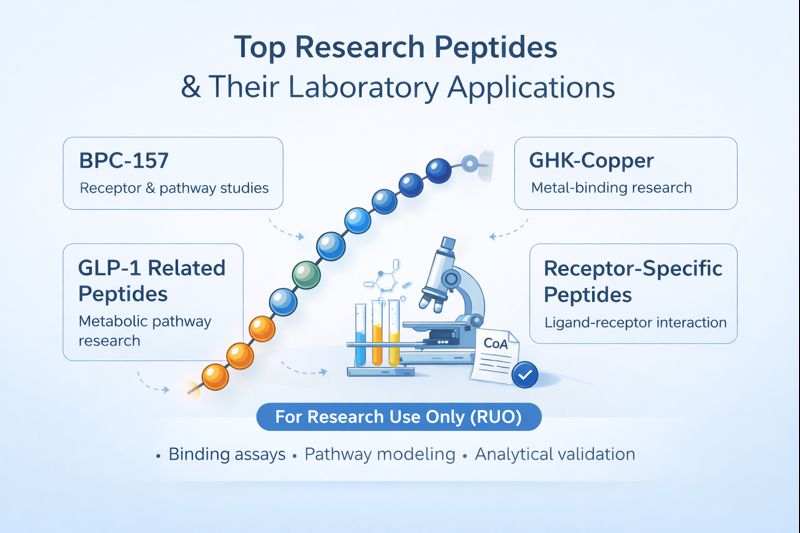
Explore the most studied research peptides and their laboratory applications. This RUO-compliant guide covers peptide selection, purity considerations, and common research uses to support accurate, reproducible scientific studies.
Research Peptides Explained: The Complete Guide for Modern Laboratory Research (2026 Update)
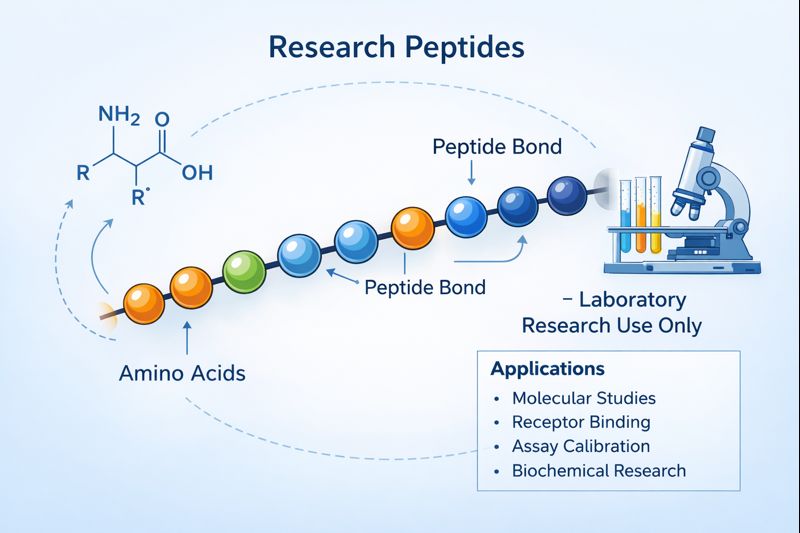
Research peptides play a critical role in laboratory studies and molecular research. This guide explains how research peptides are synthesized, tested, stored, and used responsibly under RUO compliance standards.
Peptide Stability Studies: How Storage Conditions Impact RUO Research Results
This article explains how peptide stability studies evaluate storage conditions, degradation risks, and best practices to support reliable and reproducible RUO research results.
Common Lab Mistakes That Affect Peptide Purity — And How to Avoid Them

Even minor lab errors can compromise peptide purity and ruin data reliability. This guide breaks down the most common mistakes that affect research peptide integrity—plus proven ways to prevent contamination, degradation, and handling errors in RUO lab environments.
How to Pay with BarterPay

This step-by-step guide explains how to pay with BarterPay at PeptideVerse, including checkout selection, email verification, and secure payment completion.
Peptide Research 101: Everything a New Lab Technician Should Know

Starting in peptide research? This complete guide explains how to handle, store, and analyze peptides correctly—covering purity, solubility, storage, and safety for new lab technicians.
Peptide Purity Grades Explained: What 95%, 98%, and 99%+ Mean for RUO Research

When labs compare Research-Use-Only (RUO) peptides, one of the first details they look at is the listed purity percentage. Values like 95%, 98%, or 99%+ appear on product pages and Certificates of Analysis (CoAs), but what do these numbers actually mean for day-to-day research? This guide breaks down how purity grades are defined, how they are measured, and how to choose the right level for your laboratory workflows.
How Peptide Purity Is Measured: Understanding HPLC, MS, and RUO Quality Specifications

Peptide purity is crucial for reliable RUO research. Learn how HPLC and MS measure purity and what typical RUO specs mean.
How to Read a Peptide CoA (Certificate of Analysis) — Step-by-Step Guide for RUO Peptides

A strong CoA makes verification straightforward. Here’s how to interpret the common sections and spot the details that matter.
Lyophilized Peptides: Storage, Handling, and Stability (RUO)

This guide outlines practical, RUO‑appropriate steps to preserve quality from delivery to bench.
What Are Research-Use-Only (RUO) Peptides? A Complete Guide for Labs

This article explains what “RUO” means, why it matters for your lab, and how to properly purchase, store, and handle RUO peptides.