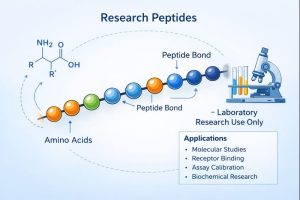
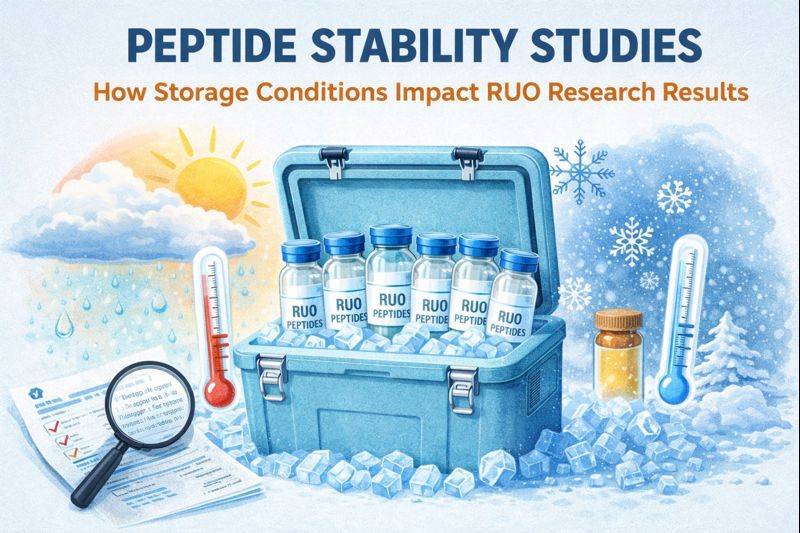
For Research Use Only (RUO). Not for human or veterinary use.
Peptide stability studies play a critical role in ensuring reliable and reproducible results in laboratory research. While peptide purity and analytical testing often receive the most attention, stability is equally important for maintaining molecular integrity throughout a study.
For researchers working with research-use-only (RUO) peptides, understanding how storage conditions affect degradation, aggregation, and chemical modification is essential. This guide explains peptide stability studies, common degradation pathways, and best practices for RUO-compliant storage.
What Are Peptide Stability Studies?
Peptide stability studies evaluate how a peptide’s chemical and physical properties change over time under defined environmental conditions. These studies help determine how factors such as temperature, moisture, light, and pH influence peptide integrity.
In RUO settings, stability studies are used to support research reproducibility—not clinical or therapeutic claims. They allow laboratories to design experiments with confidence that the peptide material remains consistent throughout the study period.
Common Peptide Degradation Pathways
- Hydrolysis – Peptide bond cleavage caused by moisture exposure
- Oxidation – Modification of amino acids such as methionine or cysteine
- Deamidation – Conversion of asparagine or glutamine residues
- Aggregation – Physical instability caused by temperature fluctuations
These degradation mechanisms are routinely monitored using analytical methods such as HPLC and mass spectrometry.
How Storage Conditions Affect Peptide Stability
Temperature Control
Lower temperatures slow chemical reactions that cause peptide degradation. Lyophilized peptides are typically stored at -20°C or colder to preserve stability over extended periods.
Moisture Exposure
Humidity is one of the most significant contributors to peptide degradation. Improper vial sealing or repeated freeze-thaw cycles can introduce moisture and reduce peptide integrity.
Light Sensitivity
Some peptide sequences are sensitive to UV or ambient light, which can accelerate oxidation reactions. Amber vials or dark storage conditions are commonly used to minimize exposure.
Lyophilization and Its Role in Peptide Stability
Lyophilization (freeze-drying) removes water from peptide material, significantly improving stability during storage and transport. Most RUO peptides are supplied in lyophilized form for this reason.
You can learn more about proper handling of lyophilized peptides in this guide:
Lyophilized Peptides: Storage, Handling, and Stability
Analytical Methods Used in Peptide Stability Studies
- High-Performance Liquid Chromatography (HPLC)
- Mass Spectrometry (MS)
- Visual inspection for aggregation or discoloration
- Comparative purity analysis over time
These methods help confirm whether a peptide remains within its documented specifications throughout a study.
Best Practices for RUO Peptide Storage
- Store lyophilized peptides at -20°C or lower
- Minimize freeze-thaw cycles by aliquoting
- Use airtight, moisture-resistant vials
- Label all vials with lot numbers and dates
Proper storage directly supports reproducibility and RUO compliance.
FAQs: Peptide Stability Studies
Are peptide stability studies required for RUO peptides?
They are not legally required, but they are widely considered best practice for ensuring consistent research outcomes.
Do stability studies imply clinical-grade peptides?
No. Stability studies support laboratory research only and do not indicate GMP or clinical use.
How long are lyophilized peptides stable?
Stability varies by sequence and storage conditions, but lyophilized peptides stored properly often remain stable for extended research timelines.
Can reconstituted peptides be stored long-term?
Reconstituted peptides are generally less stable and should be used promptly or stored according to documented research protocols.
Should lot numbers be recorded during stability testing?
Yes. Lot traceability improves reproducibility and documentation quality.
Where can I learn more about RUO labeling requirements?
The FDA provides guidance on RUO products here:
FDA RUO Guidance
Conclusion
Peptide stability studies are a foundational component of responsible RUO research. By understanding degradation pathways and implementing proper storage practices, laboratories can protect data integrity and improve experimental reliability.
PeptideVerse is committed to providing RUO peptides supported by clear documentation, analytical testing, and research-focused education.
Explore additional peptide research resources at:
https://peptideverse.com