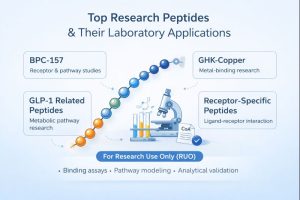

Learn what research peptides are, how they are used in laboratory studies, and why sourcing high-quality research peptides matters for modern scientific research.
For Research Use Only (RUO): The information on this page is provided for educational and research purposes only. Products and materials referenced are intended for laboratory research use only and are not intended for human or veterinary use, diagnosis, treatment, cure, or prevention of any disease.
Introduction to Research Peptides
Research peptides are short chains of amino acids widely used in laboratory and academic research to explore biological mechanisms at the molecular level. In recent years, interest in research peptides has increased due to advancements in biotechnology, analytical chemistry, and molecular biology. As a result, laboratories now rely on research peptides for structural analysis, receptor interaction studies, and experimental modeling.
Importantly, research peptides are strictly intended for research use only (RUO) and are not approved for human or veterinary use. Reputable suppliers and research institutions emphasize compliance, purity verification, and proper documentation to ensure ethical and regulatory standards are met.
This guide explores what research peptides are, how they are studied, and what laboratories should consider when sourcing them.
What Are Research Peptides?
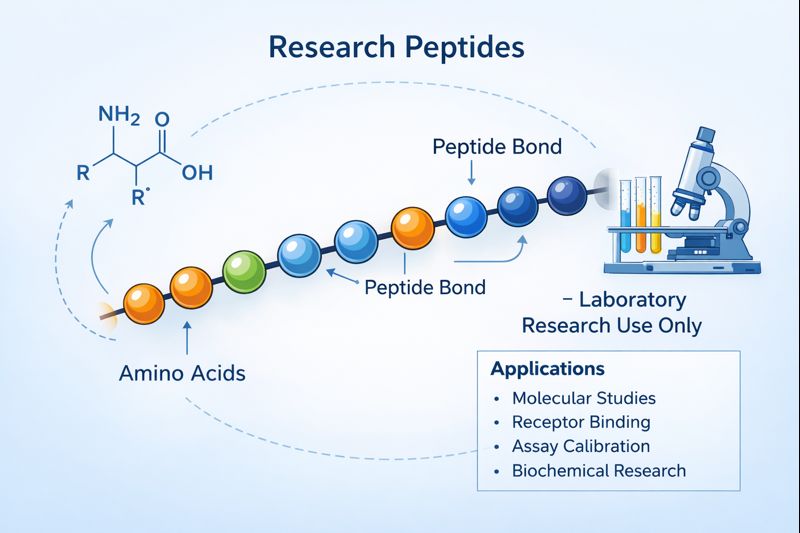
Research peptides are synthetically produced amino acid sequences designed for experimental and analytical purposes. These peptides are commonly created using solid-phase peptide synthesis (SPPS), allowing for precise sequence control and reproducibility.
Key Characteristics of Research Peptides
- Defined amino acid sequences
- Laboratory-grade synthesis
- Purity verified through analytical testing
- Used exclusively in controlled research environments
Research peptides are often studied to better understand protein interactions, enzyme behavior, and molecular signaling pathways.
How Research Peptides Are Used in Laboratory Studies
Research peptides serve as valuable tools across multiple scientific disciplines. Their small size and customizable structure allow researchers to isolate specific biological interactions without introducing full proteins.
Common Research Applications
- Molecular binding and affinity studies
- Structural and conformational analysis
- Receptor interaction research
- Assay calibration and validation
- Biochemical pathway modeling
These controlled studies help researchers generate data that supports broader scientific understanding.
Why Purity and Quality Matter in Research Peptides
One of the most important factors in peptide research is purity. Impurities can skew experimental results, reduce reproducibility, and introduce inconsistencies across studies.
Quality Indicators to Look For
- High-performance liquid chromatography (HPLC) analysis
- Mass spectrometry (MS) verification
- Clear labeling and documentation
- Batch consistency
Reliable suppliers make this data available so researchers can confidently interpret their findings.
Ethical and RUO Compliance Considerations
Maintaining RUO compliance is critical when working with research peptides. These materials are not intended for diagnostic, therapeutic, or consumption purposes.
Best Practices for Compliance
- Clear RUO labeling
- Proper storage and handling
- Restricted laboratory access
- Accurate research documentation
Following these practices protects both researchers and institutions while maintaining scientific integrity.
How to Choose a Reliable Research Peptide Supplier
Not all peptide suppliers operate at the same standard. Laboratories should evaluate vendors carefully to ensure quality, transparency, and regulatory awareness.
What to Look for in a Supplier
- Third-party testing documentation
- Transparent sourcing and synthesis methods
- Educational resources and technical support
- Clear RUO disclaimers
A reliable supplier supports not only product quality but also responsible research practices.
Related reading on PeptideVerse
- RUO Compliance Guide for Research Materials
- How to Read a Certificate of Analysis (CoA) for Research Peptides
- Browse Research Peptides (RUO)
Storage and Stability of Research Peptides
Proper storage plays a crucial role in maintaining peptide integrity. Environmental exposure can degrade peptides over time, affecting research outcomes.
General Storage Guidelines
- Store in temperature-controlled environments
- Minimize moisture exposure
- Avoid repeated freeze-thaw cycles
- Follow supplier-recommended storage conditions
These steps help preserve peptide stability throughout research use.
Future Trends in Research Peptide Studies
As scientific tools continue to evolve, research peptides are expected to play an even greater role in molecular research. Advances in synthesis methods and analytical technologies are making peptides more accessible and customizable.
What Researchers Are Watching
- Improved synthesis efficiency
- Enhanced analytical accuracy
- Expanded peptide libraries
- Increased interdisciplinary research use
These developments support ongoing innovation in laboratory science.
Frequently Asked Questions (FAQs)
Are research peptides approved for human use?
No. Research peptides are strictly for laboratory research use only and are not approved for human or veterinary applications.
Why are research peptides commonly used in studies?
Their precise structure and versatility make them ideal for controlled experimental research.
How is peptide purity verified?
Purity is commonly verified through analytical techniques such as HPLC and mass spectrometry.
Can research peptides degrade over time?
Yes. Improper storage or handling can impact stability and purity, which may affect research outcomes.
What documentation should come with research peptides?
Common documentation includes a Certificate of Analysis (CoA), purity results, and clear RUO labeling.
How do laboratories ensure compliant usage?
Laboratories follow institutional guidelines, supplier instructions, and RUO standards for handling and documentation.
Conclusion
Research peptides remain essential tools for advancing scientific knowledge in controlled laboratory environments. By understanding their properties, applications, and compliance requirements, researchers can conduct studies responsibly and effectively.
Selecting high-quality research peptides from transparent suppliers supports accurate data collection and reproducible results—cornerstones of modern scientific research.
External Resources
RUO Reminder: This content is for educational and laboratory research purposes only. Nothing here is intended as medical advice or instructions for human or veterinary use.