
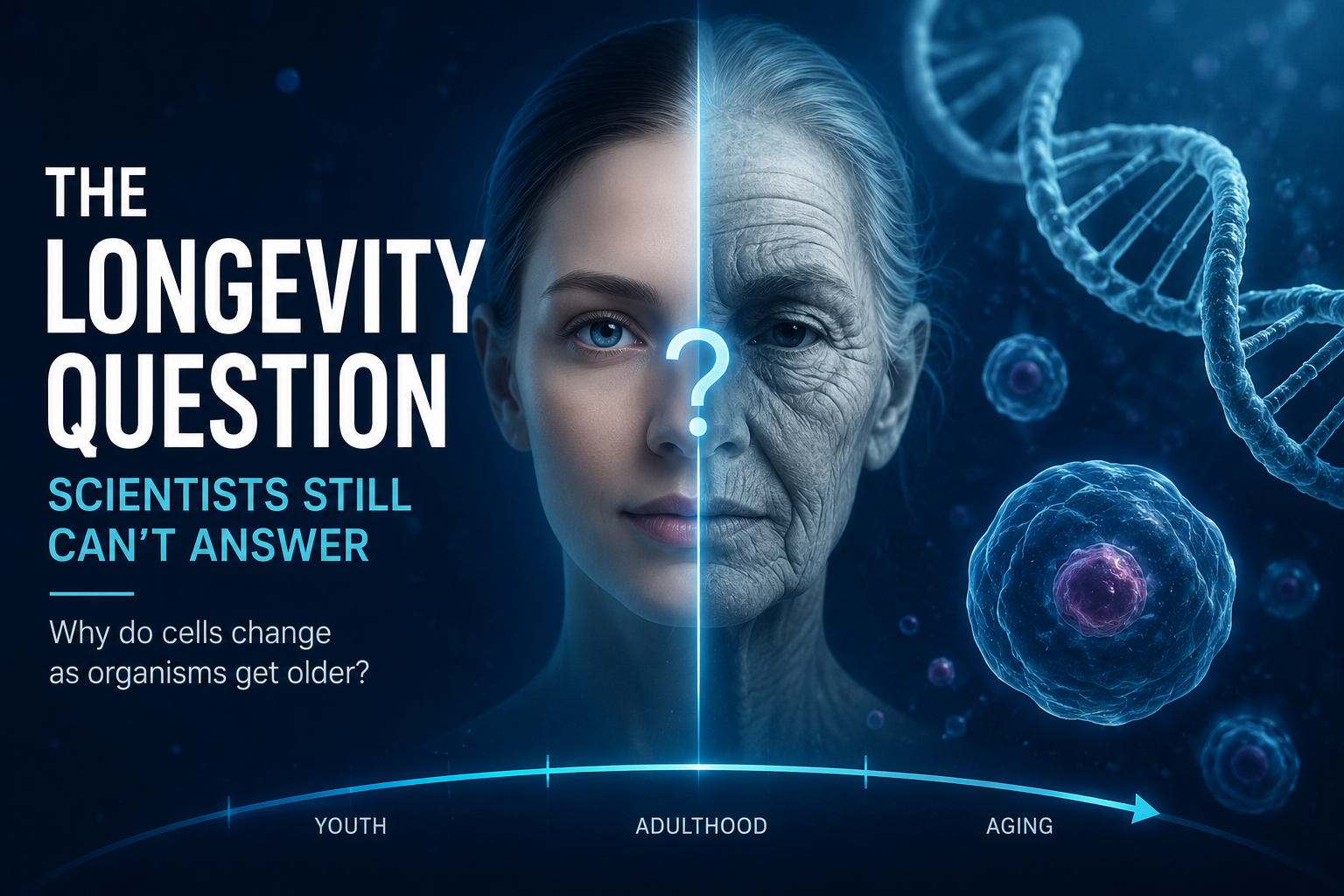
Why do cells change as organisms get older?

It’s a deceptively simple question — and researchers still don’t have one simple answer.
Modern longevity research is looking at several pieces of the puzzle, including mitochondrial biology, cellular energy, metabolic signaling, oxidative stress, and the complex communication pathways that influence how cells function over time.

Peptides have become an interesting part of this research because individual compounds can be used to investigate specific biological pathways in controlled research settings. The goal is not to jump from laboratory findings to human claims. It’s to understand the mechanisms first.
That makes analytical quality especially important. PeptideVerse focuses on research-use materials supported by testing and documentation, giving researchers a clearer starting point when investigating these emerging areas of science.
The hallmarks framework
Researchers organize the biology of aging into a set of “hallmarks,” first described in 2013 and expanded to twelve in a 2023 update. They include genomic instability, telomere attrition, epigenetic changes, loss of protein quality control, deregulated nutrient sensing, mitochondrial dysfunction, cellular senescence, stem-cell exhaustion, altered cell-to-cell communication, disabled autophagy, chronic inflammation and changes in the microbiome. Each hallmark is a research program of its own, and most of the peptide work in this area maps to one or two of them.
Mitochondria, NAD+ and cellular energy
NAD+ is a coenzyme in cellular redox reactions and a substrate for enzymes such as sirtuins and PARPs. Rodent studies report that NAD+ levels decline in several tissues with age, which has made NAD+ metabolism a common target in laboratory models.
MOTS-c is a 16-amino-acid peptide encoded within the mitochondrial genome, first described in 2015. It has been studied in cell and mouse models for its effects on metabolic signaling, including the AMPK pathway, and is a common tool for asking how mitochondria communicate with the rest of the cell.
Oxidative stress and repair signaling
Glutathione is a tripeptide (glutamate, cysteine, glycine) and the main thiol antioxidant inside cells. The ratio of reduced to oxidized glutathione (GSH/GSSG) is one of the most widely used laboratory readouts of oxidative stress.
GHK-Cu, a copper-binding tripeptide, has been studied in vitro for its effects on gene expression and extracellular-matrix components, which places it in research on tissue maintenance and cell communication.
Common laboratory readouts
- Oxygen uptake rate and extracellular acidification (mitochondrial respiration assays)
- NAD+/NADH ratio assays
- GSH/GSSG ratio and reactive oxygen species probes
- Senescence-associated beta-galactosidase staining
- Gene-expression panels for stress and repair pathways
Start with the mechanism, and with clean material
Small shifts in concentration or purity can look like biological effects in these assays. That is why analytical documentation matters as much as the hypothesis. Learn how to check it in our guides to reading a CoA and third-party testing, and review certificates in our COA library.
Explore PeptideVerse’s longevity research collection
All products and information on PeptideVerse.com are intended strictly for Research Use Only (RUO) by qualified laboratory professionals. Not for human or animal administration. Not for diagnostic, therapeutic, or clinical use. Not evaluated or approved by the FDA. The buyer assumes full responsibility for lawful procurement, handling, and use in accordance with applicable regulations. For regulatory reference: FDA Guidance on RUO Labeling (2013).