

Few areas of metabolic research have attracted as much attention as GLP signaling.

But there’s a bigger story happening underneath the headlines.
Researchers are studying how GLP-related pathways influence biological signaling and how these pathways interact with other metabolic mechanisms. This has created a much broader field of research involving compounds designed to help scientists investigate different aspects of metabolic biology.
And that’s where things get interesting.
As research expands, researchers need to know exactly what they’re working with. Molecular identity, purity, analytical testing, batch information, and proper documentation become critical when evaluating research materials.
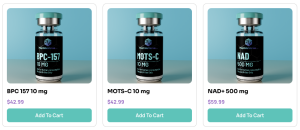
PeptideVerse provides research-use peptide materials designed for researchers exploring this rapidly evolving field.
Where GLP peptides come from
GLP-1 and GLP-2 are short peptides cut from the same precursor, proglucagon. In intestinal L-cells, the enzyme prohormone convertase 1/3 processes proglucagon into GLP-1, GLP-2, oxyntomodulin and glicentin. In pancreatic alpha cells, a different enzyme (PC2) produces glucagon instead. One gene, processed two ways, gives researchers a family of related signaling peptides to compare.
Native GLP-1 is also unusually short-lived. The enzyme DPP-4 clips its first two amino acids within minutes, which is why so much laboratory work focuses on modified analogs with altered sequences or attached fatty-acid chains that resist degradation.
Why the field kept expanding
GLP-1 acts through the GLP-1 receptor, a class B G-protein-coupled receptor that signals mainly through cAMP. Two neighboring receptors, the GIP receptor and the glucagon receptor, sit in the same family. That has pushed research in a clear direction: comparing analogs that engage one, two or three of these receptors and measuring how the signaling profile changes in cell and animal models.
That is the “bigger story” behind the headlines. The questions are no longer only about one receptor. They are about receptor balance, signaling bias and how related pathways interact.
How labs study GLP signaling in vitro
- cAMP accumulation assays in cell lines engineered to express a single receptor, used to build concentration-response curves and compare potency.
- Beta-arrestin recruitment and receptor internalization, which show whether an analog favors one signaling route over another.
- Isolated islet and beta-cell line models, used to study glucose-dependent signaling under controlled conditions.
- Enzymatic stability assays, such as incubation with DPP-4, to compare how long an analog stays intact.
Why analytical quality matters for these peptides
GLP-family analogs are long sequences, often with lipid side chains, which makes them prone to aggregation, oxidation and deamidation. Every one of those changes can shift a potency measurement. A purity result from HPLC, an identity check by mass spectrometry and a known net peptide content are what make an EC50 comparable from one experiment to the next.
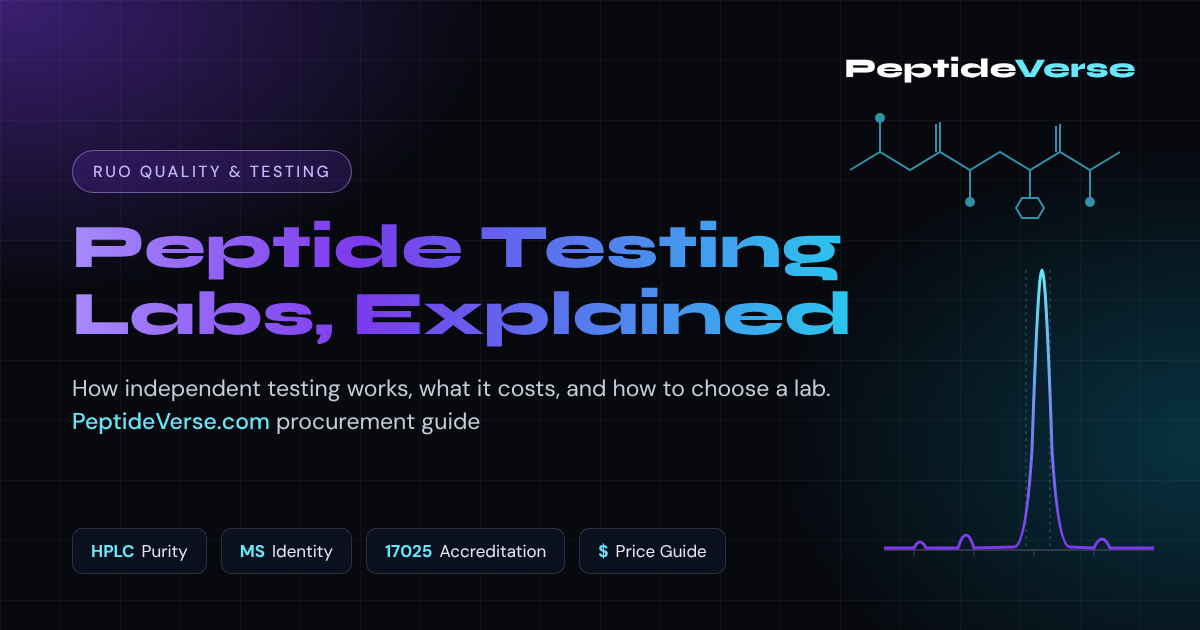
For the details, see how peptide purity is measured, peptide degradation pathways and our guide to peptide testing labs. Certificates for our materials are published in the COA library.
Explore PeptideVerse’s GLP & metabolic research collection
All products and information on PeptideVerse.com are intended strictly for Research Use Only (RUO) by qualified laboratory professionals. Not for human or animal administration. Not for diagnostic, therapeutic, or clinical use. Not evaluated or approved by the FDA. The buyer assumes full responsibility for lawful procurement, handling, and use in accordance with applicable regulations. For regulatory reference: FDA Guidance on RUO Labeling (2013).